
This post contains affiliate links. If you buy through one I may earn a small commission at no cost to you. Prices checked September 23, 2026.
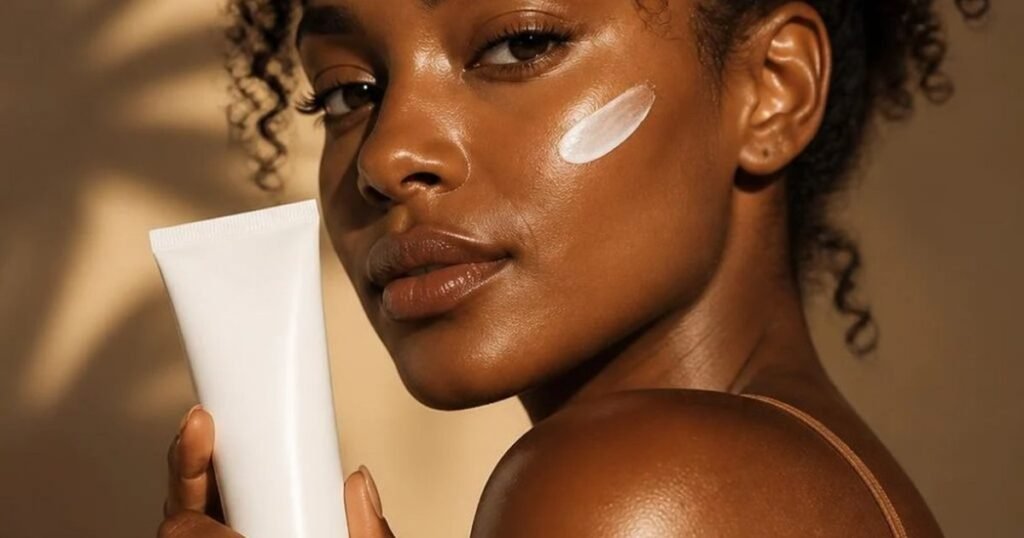
The white cast question has a frustrating answer: it depends entirely on which CeraVe sunscreen you picked up, and the bottles look almost identical on the shelf.
The short version
- CeraVe Hydrating Sheer SPF 30 uses a combination of chemical and mineral filters, per CeraVe’s own product page. That mix is why it goes on far more invisibly than a mineral-only formula.
- CeraVe mineral formulas rely on zinc oxide and titanium dioxide. Those are white minerals that sit on top of your skin, and on deep skin tones they read grey or ashy unless the formula is tinted.
- The tinted mineral versions exist specifically to solve this, and they work — within the shade range the tint covers.
So if you bought a CeraVe sunscreen and it left you ashy, you almost certainly bought a mineral one. It is not a fault in the product; it is what those filters physically do.
Why mineral sunscreen casts and chemical does not
Mineral filters work by sitting on the surface and scattering light. They are literally white pigment, which is why they are visible. Chemical filters absorb into the top layer of skin and convert UV to heat, so there is nothing sitting on top to see. Newer mineral formulas grind the zinc finer and add tint to counteract the whiteness, which reduces the cast without eliminating the physics.
If you want to stay with CeraVe
- Choose the sheer or hydrating formulas over the mineral ones if invisibility is the priority.
- If you need mineral — for sensitivity or a dermatologist’s advice — get the tinted version, not the untinted one.
- Apply in thin layers and let each one set for a minute. A full application at once is when the cast is worst.
- Check it in daylight, not bathroom light. Bathroom bulbs hide grey; a phone camera in sunlight does not.
The honest caveat about tint
Tinted mineral sunscreens come in a narrow shade range, usually one universal shade meant to work across a spread of skin tones. On deep skin it can still read slightly grey or slightly orange depending on undertone. The brands that do this best make several shades, and they cost more than $14. That is a real limitation of the budget end of this category, and it is worth knowing before you buy rather than after.
How to test before you commit
Swatch on your jawline, not your hand — the hand is usually a different tone from the face. Rub it in fully, wait five minutes for it to set, then photograph it in daylight. A cast that is invisible in the mirror often shows up plainly in a photo, which is also how it will look to everyone else.
The one to start with
On whether the expensive version is worth it: is EltaMD UV Clear worth $40 more than CeraVe?
General information, not medical advice. Any sunscreen you will actually wear every day beats a better one sitting in a drawer.
Pingback: How Often Can You Use a Mighty Patch? The Real Answer
Pingback: The Ordinary Niacinamide or Glycolic Acid: Which First?